
By Darryn DiFrancesco, Assistant Professor, School of Nursing, University of Northern British Columbia and Alyssa Casey, BScN Student (’26) and Research Assistant, School of Nursing, University of Northern British Columbia
Background
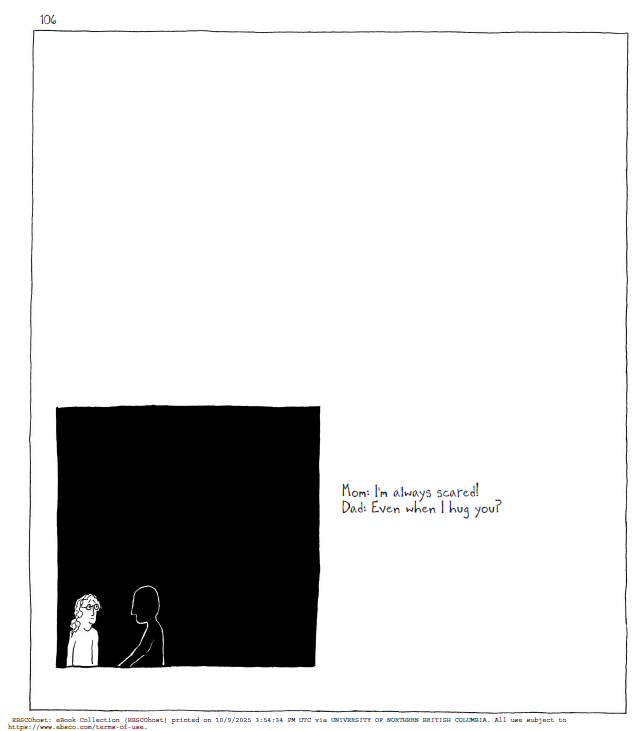
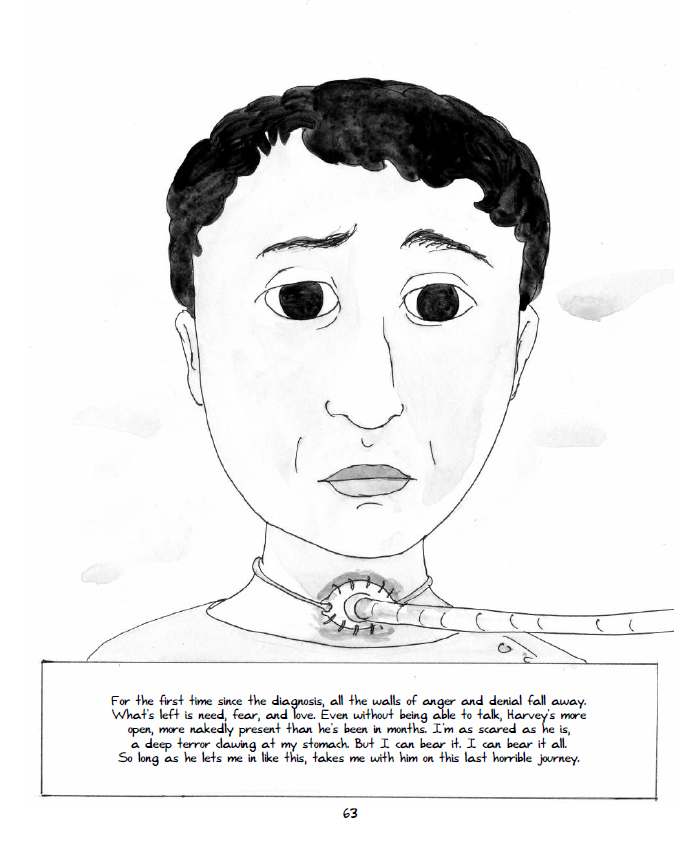
Alyssa: Since 2021, British Columbia’s annual death rate has exceeded that of the birth rate, so it may surprise you to learn that many nurses receive very little education regarding death, dying, and grief.¹ ² ³ As someone who has recently gone through a nursing program, I received almost no death education, with the exception of what I asked my instructors to cover. Recognizing this gap in education, one of my professors decided that we could make a positive change within our institution. Dr. DiFrancesco designed a study to explore whether graphic memoirs, autobiographical comics told through image and text, could be used as educational tools for learning about the socio-cultural dimensions of death, dying, and terminal illness.
Darryn: In 2025, my father was hospitalized with complications from stage four cancer. He spent almost a month in the in-patient unit before passing away in April. I was fortunate to be able to spend many days with him during his final weeks. During this time, I witnessed examples of end-of-life care that ranged from spectacular to poor. It was my sense that some of the junior nurses were uncomfortable with the dying process and lacked skills to connect with my dad and our family.
Reflecting on the concerns raised by Alyssa and my other students, I wondered how we could support nursing students in gaining more confidence around end-of-life care. Research supports this concern: although Canadian nursing schools report incorporating death into the curriculum, students consistently report feeling unprepared to deal with death in clinical environments, suggesting that more ought to be done.² ⁴ ⁵ ⁶ The current literature suggests that even the slightest attention to the topic of death in a safe setting, such as class discussion, has tremendous results on nursing students’ perception of death.⁷ Studies show that when students have the opportunity to reflect upon death and examine the impacts and complications experienced by families, their attitude towards dying patients and their families improves.⁸
As an avid reader, it struck me that graphic memoirs could generate exactly the kind of reflection and discussion nursing students need. In conversation with my class, I raised the idea of using comics as a non-intimidating way to learn about death and dying. They were supportive of the idea, so I pitched it in my application to the 2025–2027 BCcampus Research Fellows program.
Research Methods
Our study attempts to measure the impacts of an educational module (incorporating a graphic memoir and reflective discussion) on nursing students’ self-perceived confidence around death and dying. Students first complete a survey incorporating questions about demographic information, prior experiences with death, and questions from the Self-Competency in Death Work Scale (SC-DWS), a validated scale that explores professional self-competency in dealing with death.⁹ Next, they read a graphic memoir from a pre-selected list and participate in a structured, reflective class discussion about the story and takeaways for nursing practice. After this, they complete a second survey in which they complete the SC-DWS again and answer open-ended (qualitative) questions about their experience participating in the educational module. The research will measure changes in students’ self-perceived confidence in handling death in clinical settings while also exploring their comments about the learning experience.
In addition to the student component, we are also soliciting feedback from instructors about the feasibility and value of integrating the graphic memoir module into their classes. Once the study is complete, we hope to develop an open educational resource (OER) to support other instructors wishing to incorporate graphic memoirs and comics into their courses.
What We Hope to Accomplish
Through this study we hope to understand whether and how comics can be used to help nursing students (and other students in caring professions and programs) learn about death, dying, and empathetic care. Death is a difficult topic for many people, often exacerbated by a culture that frequently denies or is fearful of death.¹⁰ As accessible, interesting, and unique media, comics present an excellent opportunity for students to learn about death, dying, and patient and family experiences in a low-stakes, non-intimidating way. Discussing death openly in a structured classroom setting can help nursing students think about how they can better support dying patients and their families, ultimately enhancing those difficult final moments while also improving their own abilities to cope with this challenging experience.
Who Benefits From This Research
This research has the potential to benefit multiple groups. Nursing students stand to gain confidence and a greater sense of preparedness around end-of-life care,¹¹ and better-prepared nurses mean better experiences for dying patients and their families during one of life’s most difficult moments. Creative, low-stakes death education may also reduce the risk of nurse stress and burnout, supporting both individual well-being and high-quality care.¹² Finally, instructors in nursing and other caring professions will be able to draw on our findings and our OER guide, should they wish to bring a similar approach into their own courses.
Ultimately, death is something that affects us all. The end-of-life is a period worthy of our time, attention, and ongoing reflection.
References
- Government of British Columbia. Fertility Trends in British Columbia: 1991–2023. 2025.
- Parry ME. Student nurses’ experience of their first death in clinical practice. Int J Palliat Nurs. 2011;17(9):446–51.
- Vogel L. Nursing schools to teach new ways to cope with death. CMAJ. 2011;183(4):418.
- Edo-Gual M, Tomás-Sábado J, Bardallo-Porras D, Monforte-Royo C. The impact of death and dying on nursing students: an explanatory model. J Clin Nurs. 2014;23(23–24):3501–12.
- Wilson DM, Goodwin BL, Hewitt JA. An examination of palliative or end-of-life care education in introductory nursing programs across Canada. Nurs Res Pract. 2011;2011:907172.
- Murnane S, Purcell G, Reidy M. Death, dying and caring: Exploring the student nurse experience of palliative and end-of-life education. Br J Nurs. 2023;32(11):526–531.
- Alt-Gehrman P. Education provided to undergraduate nursing students about end-of-life care. J Hosp Palliat Nurs. 2017;19(6):571–579.
- Chu E, Jang S. The effects of a death preparation education program on death anxiety, death attitudes, and attitudes toward end-of-life care among nurses in convalescent hospitals. J Hosp Palliat Care. 2021;24:154–164.
- Chan WCH, Tin AF, Wong KLY. Coping with existential and emotional challenges: Development and validation of the self-competence in death work scale. J Pain Symptom Manage. 2015;50(1):99–107.
- Frommelt KHM. The effects of death education on nurses’ attitudes toward caring for terminally ill persons and their families. Am J Hosp Palliat Med. 1991;8(5):37–43.
- Testoni I, Ronconi L, Orkibi H, et al. Death education for palliative care: a European project for university students. BMC Palliat Care. 2023;22:47.
- Pfaff K, Markaki A. Compassionate collaborative care: an integrative review of quality indicators in end-of-life care. BMC Palliat Care. 2017;16:65.