Workshop 1: Securing Your Own Oxygen Mask First: Employee Wellness as the Foundation For Student Wellness
February 10, 2026 | 10:00 a.m.–11:30 a.m.
As faculty and staff in higher education, we can only meet students’ accessibility needs when our own needs are met first. Yet cultural, institutional, and personal barriers often impede our self advocacy, leading to burnout and leaving us ill-equipped to create meaningful community care in our classrooms.
This 90-minute, participatory workshop is the first in a two-part series exploring the vital connection between employee and student flourishing. Through stories and reflective practices, we’ll:
- Examine how common accessibility barriers can make getting our needs met feel impossible
- Develop concrete short- and long-term plans for self- and community-advocacy around wellness
This workshop sets the foundation for Workshop 2, where we’ll collaborate on strategies for securing the masks for our students. It is designed for disabled, neurodivergent, and chronically-ill faculty and student services staff, though adaptable for anyone seeking to balance their accessibility needs with those of the populations they serve.
Workshop 2: Then Securing the Mask for Our Students: Planning for Collaborative Care in Higher Education
February 24, 2026 | 10:00 a.m.–11:30 a.m.
Ready to shift from individualized accessibility to collaborative care? This workshop helps you develop practical strategies for balancing your accessibility needs with those of your students.
Come prepared with a real ‘sticky situation’ from your context – a moment when your accessibility needs clashed with students’, or where you anticipate future challenges. Through stories and hands-on collaboration, we’ll:
- Reframe relational dynamics in our situations to strategize solutions rooted in collaborative care
- Leave with one concrete strategy and a plan for how to implement it in your own context to help ensure both you and your students have your oxygen masks secured (or better yet, create conditions that keep the plane from going down in the first place!)
This 90-minute workshop is the second in our two-part series on employee and student flourishing. While participation in the first workshop is strongly advised, it’s not required. Don’t have a sticky situation? Don’t worry. You’ll be able to collaborate with others to ensure you can still participate meaningfully in the experiential learning.
Register Now!
These sessions may be recorded, archived, and shared after the event.
About the Facilitator
Natalie Wigg-Stevenson is Associate Professor of Theology and Contextual Education at Emmanuel College, Victoria University (University of Toronto). While her research focuses on ethnographic approaches to theology, her pedagogical passion lies in decolonizing and ‘cripping’ classrooms through more relationally-rooted teaching and learning design. As a neurodivergent scholar living with chronic illness, she brings both personal insight and professional expertise to helping faculty and staff in higher education not just survive but thrive in their work with students.
Supporting Neurodiversity in Post-Secondary Education Series
February Focus: Supporting Neurodiversity in Post-Secondary Education Series (blogpost)
NeuroChats: Conversations Towards Inclusive Campuses (podcast series)
Designing for Inclusive Learning with AI, February 5, 2026
From Self-Advocacy to Collaborative Care: Supporting Neurodivergent Wellness in Higher Education, February 10 and 24, 2026
Bridging the Gap: Supporting Neurodivergent Learners from Campus to Career, February 19, 2026
About the Event
This session shares national research findings fon the barriers neurodivergent learners face when moving from post-secondary education into the workforce. Drawing on the lived experiences of neurodivergent students, as well as insights from advisors, administrators, and faculty, the session highlights the challenges neurodivergent learners encounter when preparing for employment.
The session will highlight practical strategies and actionable recommendations for post-secondary leaders, educators, and staff to enhance supports and student success during this transition.
Please note, the session will only be partially recorded. To get the most out of the learning, please plan to attend synchronously.
Research Acknowledgement: This research was conducted by the Conference Board of Canada in partnership with the Future Skills Centre, whose support made this study possible.

Register Now!
This session will be recorded, archived, and shared with course registrants.
About the Facilitator
Dr. Jennifer Fane is the Lead Research Associate in the education and skills knowledge area at the Conference Board of Canada. She holds an interdisciplinary PhD in education, public health, and social policy, and leads the Conference Board’s neurodiversity research portfolio. With over 18 years’ experience as a classroom teacher, professor, and educational researcher in Canada and Australia, she has worked across the birth-to-five, K-12, post-secondary, and non-profit sectors. As a neurodivergent educator and researcher, Jennifer is passionate about translating research into practice to strengthen learning and employment outcomes for neurodivergent individuals.
Supporting Neurodiversity in Post-Secondary Education Series
February Focus: Supporting Neurodiversity in Post-Secondary Education Series (blogpost)
NeuroChats: Conversations Towards Inclusive Campuses (podcast series)
Designing for Inclusive Learning with AI, February 5, 2026
From Self-Advocacy to Collaborative Care: Supporting Neurodivergent Wellness in Higher Education, February 10 and 24, 2026
Bridging the Gap: Supporting Neurodivergent Learners from Campus to Career, February 19, 2026

Session Description
This workshop offers a brief but meaningful reflection on disability rights through an Indigenous lens, drawing from traditional Nɬeʔkepmx ecological knowledge. It challenges Western deficit-based models and affirms the strength, knowledge, and interdependence of all community members, including those living with disabilities. Participants will gain insight into how Indigenous knowledge systems hold space for diverse bodies, minds, and spirits, and how this informs a decolonial approach to accessibility in post-secondary spaces.
Register Now!
This session will be recorded, archived, and shared after the event.
About the Facilitator
Sue Sterling-Bur is a member of the Nłeʔkepmx and Stó:lō Nations and sits with the Duntem’yoo (Bear) Clan in Bahlats with Nadleh Whut’en from the Carrier Sekani Nation. She is a strong advocate for the advancement of Indigenous Rights and educational opportunities for all.
Sue holds a master’s degree in social work and is a Ph.D. candidate at The University of British Columbia Okanagan, where she also serves as the Manager of Indigenous Strategies and Initiatives. Her doctoral research offers an Indigenous perspective on the systems of belief around giftedness in children with disabilities. Her research is grounded in Nłeʔkepmx Spilahem and Speta’kl stories and aims to identify the ethics, values, and beliefs that guide working with and supporting Indigenous people with disabilities.
Sue’s experience includes supporting Indigenous communities and agencies in B.C. to develop and implement programming for Indigenous children; serving as a Child & Youth Mental Health Advisor for Doctors of B.C.; acting as a Provincial Child Care Advisor for the Ministry of Children and Family Development, serving as Vice President for Students for the Nicola Valley Institute of Technology; sitting on the Board of the BC Aboriginal Child Care Society, and more recently, being appointed co-lead of the Idigenous Research stream at the Canadian Institution for Inclusion and Citizenship.
2025-26 Accessibility Bites Series
- Accessibility Bites: Introduction to Web Accessibility, August 28, 2025
- Accessibility Bites: Supporting Post-Secondary Students with ADHD, September 25, 2025
- Accessibility Bites: Let’s Talk about Learning Disabilities, October 30, 2025
- Accessibility Bites: The Gift of Dyslexia, November 27, 2025
- Accessibility Bites: Access Friction, December 11, 2025
- Accessibility Bites: UDL 3.0 in Practice, January 29, 2026
- Accessibility Bites: An Indigenous Lens on Disability Rights, February 26, 2026
For recordings and resources from previous Accessibility Bites workshops, visit the Accessibility Bites Pressbook.
About the Session
Workshop participants will explore how AI can support literature searching within literature reviews and examine ethical issues such as plagiarism, privacy, and research integrity. Participants will gain a foundational understanding of key AI-powered literature searching tools and learn how to evaluate their outputs for accuracy, relevance, and bias through hands-on activities.
By the end of this workshop, participants will be able to:
- Use AI tools effectively for literature searching
- Identify appropriate use cases for AI tools across the literature review process
- Critically evaluate AI-generated outputs for accuracy, relevance, and potential biases
- Recognize ethical considerations and limitations of using AI for literature reviews
Register Now!
This session will be recorded, archived, and shared after the event.
About the Facilitator
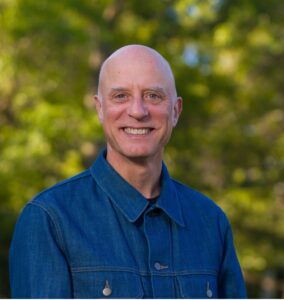
Justin Harrison is a PhD candidate in the Faculty of Education at the University of Victoria focusing on media literacy, news literacy, and their intersections with civic engagement and political polarization. He has over twenty years professional experience as an academic research librarian focusing on information literacy, and currently holds the position of Engagement & Learning Librarian at the University of Victoria Libraries.
About the Series
Discover the BCcampus EdTech Sandbox Series!
In these 90-minute workshops, expert leaders will introduce and demonstrate cutting-edge, open, and free, or low-cost educational technology tools aligned with the B.C. Post-Secondary Digital Literacy Framework. Participants will experiment with tools, work with fellow educators to review features of the tools, gain insights into teaching activities, and discover ways to integrate these tools into courses.
Focus Areas for 2025-2026
- The AI Sandbox: a space dedicated to experimenting with, and reviewing, artificial intelligence tools and applications in educational settings.
- Other Learning Technologies: a space to explore, experiment, and review emerging learning technologies beyond AI, highlighting their potential impacts and practical applications.
EdTech Sandbox Series Sessions
-
- September 10, 2025 – Choose Your Own Adventure! Dynamic Branching Scenarios and Game Maps With H5P and AI Tools
- October 8, 2025 – The Intelligent Notebook: Become a Knowledge Expert With NotebookLM
- October 17, 2025 – [Special EdTech Sandbox] Remote Proctoring Through an Ethical Lens: the Case Against Surveillance
- November 26, 2025 – Claude vs. ChatGPT: Choosing the Right AI for the Job
- January 21, 2025 – Build Your Own Teaching Bot: My Story of Creating CITE GPT as a Teaching Tool
- March 3, 2026 – Literature Searching with Artificial Intelligence